How to find the right marine surveyor before you buy a yacht
A pre-purchase survey is the best money you will spend on a boat. Here is how to choose an independent surveyor, what happens on survey day, and how to use the report in negotiation.
By Yachtxchange Editorial · May 12, 2026 · 5 min read
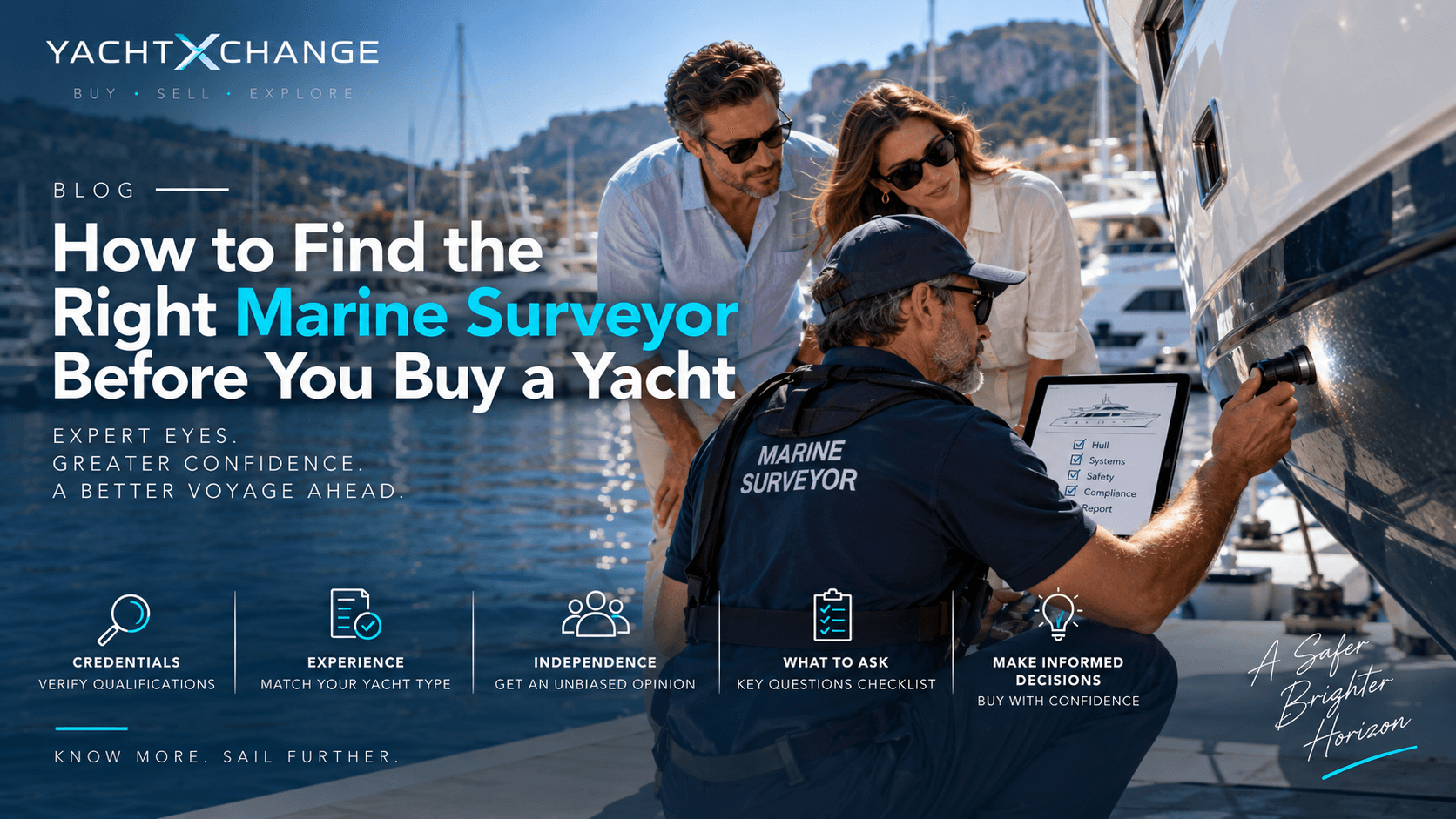
A yacht can look perfect on the dock and still hide a wet core, tired engines or a rig near the end of its life. Photographs, a sea trial on a calm day and the seller's description will not show you these things. A good marine surveyor will, and the report they write is often the most useful document you will have in the whole purchase.
This guide explains the main types of survey, how to choose a surveyor you can trust, what happens on survey day, and how to read the report and use it.
Why a pre-purchase survey matters
It tells you what you are buying. The survey records the condition of the hull, deck, structure, machinery and systems, and lists defects in order of importance.
It protects your deposit. Most purchase agreements make the sale conditional on survey. If the survey finds serious problems, you can usually negotiate a lower price, ask for repairs or withdraw, depending on what your agreement says.
Your insurer will likely ask for it. Many insurers require a recent survey before they cover an older or larger yacht, and a lender may require one before financing.
It is a plan for the first year. Even on a sound boat, the report gives you a list of maintenance to budget for.
Types of survey
- Pre-purchase survey. The full inspection a buyer commissions before completing a purchase. It covers structure, hull, deck, machinery, systems, safety equipment and, usually, a sea trial and an inspection out of the water.
- Condition and valuation survey. Usually requested by an insurer or a lender. It assesses general condition and gives an opinion of market value. It is less detailed than a pre-purchase survey and is not a substitute for one when you are buying.
- Machinery or engine survey. A specialist inspection of engines, gearboxes and generators, often with oil samples sent to a laboratory. On a motor yacht, engines are a large share of the value, so this is rarely money wasted.
- Rig survey. A specialist inspection of mast, boom, standing and running rigging and fittings, often going aloft. Many insurers have their own expectations on rig age; ask yours.
- Damage survey. Done after an incident, usually for an insurer, to establish the cause and extent of damage and the cost of repair.
On larger yachts, a lead surveyor often coordinates several specialists for engines, electrics, stabilisers and paint.
Accreditation and professional bodies
Marine surveying is not regulated the same way in every country, so membership of a professional body is one of the best signs of a qualified surveyor. Well-known bodies include:
- SAMS (Society of Accredited Marine Surveyors) and NAMS (National Association of Marine Surveyors), both mainly in the United States.
- IIMS (International Institute of Marine Surveying), with members in many countries.
- YDSA (Yacht Designers and Surveyors Association), mainly in the United Kingdom.
Membership levels and requirements differ, so ask which grade the surveyor holds and confirm it with the body itself.
How to choose a surveyor
- Experience with your boat. Ask how many yachts of this type, size and build material they have surveyed recently. A surveyor used to steel trawler yachts may not be the right person for a carbon racing yacht or a large catamaran.
- Sample reports. Ask for a redacted sample report. Look for clear photographs, defects ranked by priority and specific recommendations, not pages of general text.
- Independence. Choose your own surveyor. Be cautious about using one recommended only by the seller's broker, and ask any surveyor whether they have a relationship with the seller or the listing broker.
- Insurance. Ask whether they carry professional indemnity insurance, and read the limits of liability in their terms.
- Scope and price in writing. Agree exactly what is included: haul-out, sea trial, rig, engines, moisture readings, ultrasonic thickness readings on metal hulls. Ask what is excluded and what will cost extra.
- Availability near the boat. Travel costs add up. A good local surveyor is often better value than flying in someone you know.
What happens on survey day
Surveys usually take one to three days for a private yacht, longer for a large one. Plan for the buyer to pay for the survey, the haul-out and yard fees, and any specialist work; the seller normally makes the boat available and in working order.
- Afloat inspection. The surveyor goes through the interior, deck, systems, electrics, plumbing, safety equipment and documents.
- Sea trial. The yacht is run under way: engines at different loads, steering, navigation equipment, generators, stabilisers and, on a sailing yacht, the sails and rig. The seller's skipper or broker is usually on board.
- Haul-out. The yacht is lifted out so the surveyor can check the hull, keel, rudder, propellers, shafts, seacocks and anodes. On a GRP hull they may take moisture readings and sound the hull; on a metal hull, thickness readings.
- Debrief. A good surveyor will tell you the main findings before they leave. Attend if you can, or ask your broker to.
The written report usually follows within a few days.
How to read the report
Most reports separate findings by urgency. Typical categories are:
- Safety or seaworthiness issues that must be fixed before the boat is used.
- Recommendations that should be dealt with soon to avoid further damage.
- Observations about normal wear and routine maintenance.
Read the whole report, not only the summary. Note what the surveyor could not inspect, such as tanks, hidden areas or equipment that was not working, and ask whether further investigation is worth doing. A survey is a professional opinion on the day, not a guarantee.
Using the report in negotiation
Focus on the items that matter: structural problems, engine issues and safety defects. Wear and tear that any boat of that age would show is rarely a strong argument for a lower price.
Get repair quotes for the significant items. Then, through your broker, you can propose a price reduction, ask the seller to complete specific repairs before closing, or, if the findings are serious, withdraw within the terms of your agreement. Keep the deadlines in the agreement in mind: survey periods are usually short.
Find a surveyor
Our directory of marine surveyors lists vetted surveyors by location, so you can find one close to the boat you are considering. Browse yachts for sale to build your shortlist, and read our guide to buying a superyacht in Barcelona for how a larger purchase works from offer to closing.
This guide is general information, not legal or technical advice. Survey practice and the terms of purchase agreements vary; confirm the details with your surveyor, broker and advisers.