Buying a superyacht in Barcelona: a buyer’s guide
Why Barcelona is one of the best places in the Mediterranean to buy a superyacht, how the purchase works step by step, and the Spanish tax and flag questions to settle before you sign.
By Yachtxchange Editorial · July 11, 2026 · 5 min read
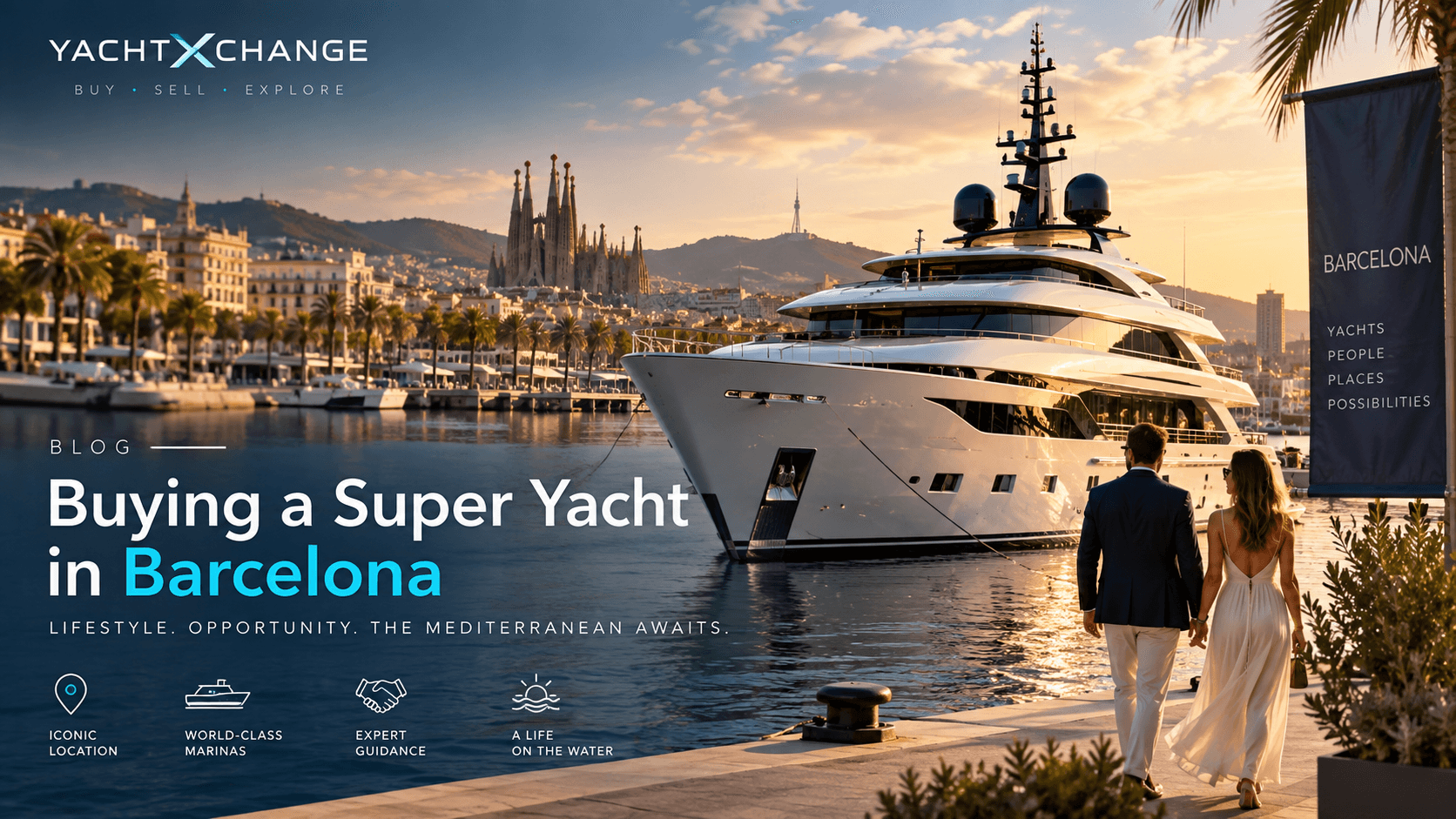
Barcelona has quietly become one of the best places in the Mediterranean to buy a superyacht. Not because it has the most boats for sale, but because so many large yachts pass through it: to berth in the old harbour, to refit over the winter, or to start a season that runs from the Balearics to the Riviera. For a buyer, that means more boats to see in person, more specialists within walking distance, and a city that makes a week of viewings genuinely pleasant.
This guide walks through how a purchase works here, what is particular to buying in Spain, and the mistakes that cost buyers the most.
Why Barcelona
The yachts come to you. The old harbour, Port Vell, is home to one of the Mediterranean's best-known superyacht marinas, with berths for some of the largest yachts afloat. Next door, the port hosts one of the world's major superyacht refit yards. Between them, a steady stream of yachts over 24 metres spends time in the city every year, many of them for sale or quietly open to offers.
Winter is viewing season. From October to April, many Mediterranean yachts lie up in Barcelona for maintenance. That is the best time to inspect a boat: systems are opened up, the crew has time to show you around, and you can see the yard's work lists, which tell you more about a yacht than any brochure.
Everything else is close. Surveyors, maritime lawyers, flag and tax advisers, crew agencies and insurers all work from the city, and an international airport is twenty minutes from the dock. The Balearics are an overnight passage away for a sea trial worth the name.
How a superyacht purchase works
The steps are much the same wherever you buy, and in the Mediterranean they usually follow the MYBA framework that most brokers use.
- Shortlist and view. Agree a brief with your broker: size, range, guest and crew numbers, the waters you plan to cruise, and whether you will ever charter. View in person; photographs flatter every yacht.
- Offer and agreement. Once terms are agreed, both sides sign a Memorandum of Agreement (the MYBA MOA is the industry standard). It sets the price, the conditions, the closing place and date, and the deposit, typically 10%.
- Deposit with a stakeholder. The deposit is held by an independent escrow agent or the broker's client account, never paid directly to the seller. (Yachtxchange never holds buyers' money; we work with your broker and their stakeholder.)
- Survey and sea trial. You commission an independent survey of hull, machinery and systems, often with specialist surveyors for engines, electrics and rig, and a sea trial under way. On a classed yacht, check the class records and the status of the next periodic survey.
- Acceptance or rejection. Based on the survey, you accept the yacht, accept it subject to agreed repairs or a price adjustment, or reject it and recover your deposit as the MOA provides.
- Closing. The balance is paid to the stakeholder; the seller delivers a bill of sale free of debts, the yacht is deleted from the old registry and registered under yours, and both sides sign a protocol of delivery and acceptance. Plan the closing location with your advisers: it can matter for tax.
What is particular to buying in Spain
These points are where most of the money is won or lost. Treat what follows as the questions to ask, and confirm the answers with a Spanish tax adviser and a maritime lawyer for your own situation: the rules depend on your residence, the yacht's flag and how you will use her.
- VAT status. Ask whether the yacht is "EU VAT paid", and ask for the evidence. A yacht without VAT paid in the EU can attract Spain's 21% VAT if she is imported for private use by an EU resident. Non-EU residents may be able to keep a yacht in EU waters for a limited period under temporary admission, subject to strict conditions.
- Spain's registration tax. Spanish residents who flag a yacht in Spain, or use a large yacht in Spanish waters, can face Spain's special registration tax (IEDMT), which applies to recreational vessels over 15 metres. Yachts in genuine commercial charter can be exempt. Get advice before you sign, not after you arrive.
- Flag. Many large yachts fly Red Ensign flags (the Cayman Islands or the UK, for example), Malta or the Marshall Islands. The choice affects crew rules, survey regimes, charter options and tax, so decide it with your advisers early.
- Charter licence. If you plan to charter in Spanish waters, the yacht needs the right licence and paperwork, and the rules differ from those in France or Italy.
The real cost of owning
The purchase price is the beginning. A common rule of thumb puts annual running costs at around 10% of the yacht's value: crew salaries and benefits, berthing, insurance, maintenance and refit, fuel, management and class. A summer berth in a prime Mediterranean marina, and a winter refit slot, should be booked months ahead.
Mistakes that cost buyers the most
- Skipping the specialist surveys to save a few weeks. Engines, generators, stabilisers and the hull below the waterline are where the expensive surprises live.
- Leaving tax and flag until the end. The structure you buy through can save, or cost, a significant share of the price.
- Not reading the refit history. A yacht that has had regular, documented yard periods is worth more than one that only looks well kept.
- Falling for the boat, not the brief. The yacht should fit how you will actually use her: the guests, the waters, the season and the crew she needs.
Start your search
Browse the yachts for sale in Spain on Yachtxchange, or the whole catalogue if you are open to buying elsewhere in the Mediterranean and cruising to Barcelona. When you have a shortlist, our directory of marine surveyors lists vetted surveyors near each boat, and the Spanish marinas directory helps you plan where she will live.
Selling instead? List your yacht and reach buyers across Europe, the Americas and the Middle East.
This guide is general information, not legal or tax advice. Rules change and depend on your circumstances; take advice from qualified Spanish advisers before you commit.