Choosing a flag and registering your yacht
The flag your yacht flies decides which rules she follows, how she can be used and financed, and how easy she will be to sell. A practical guide to registries, the process and the mistakes to avoid.
By Yachtxchange Editorial · March 2, 2026 · 6 min read
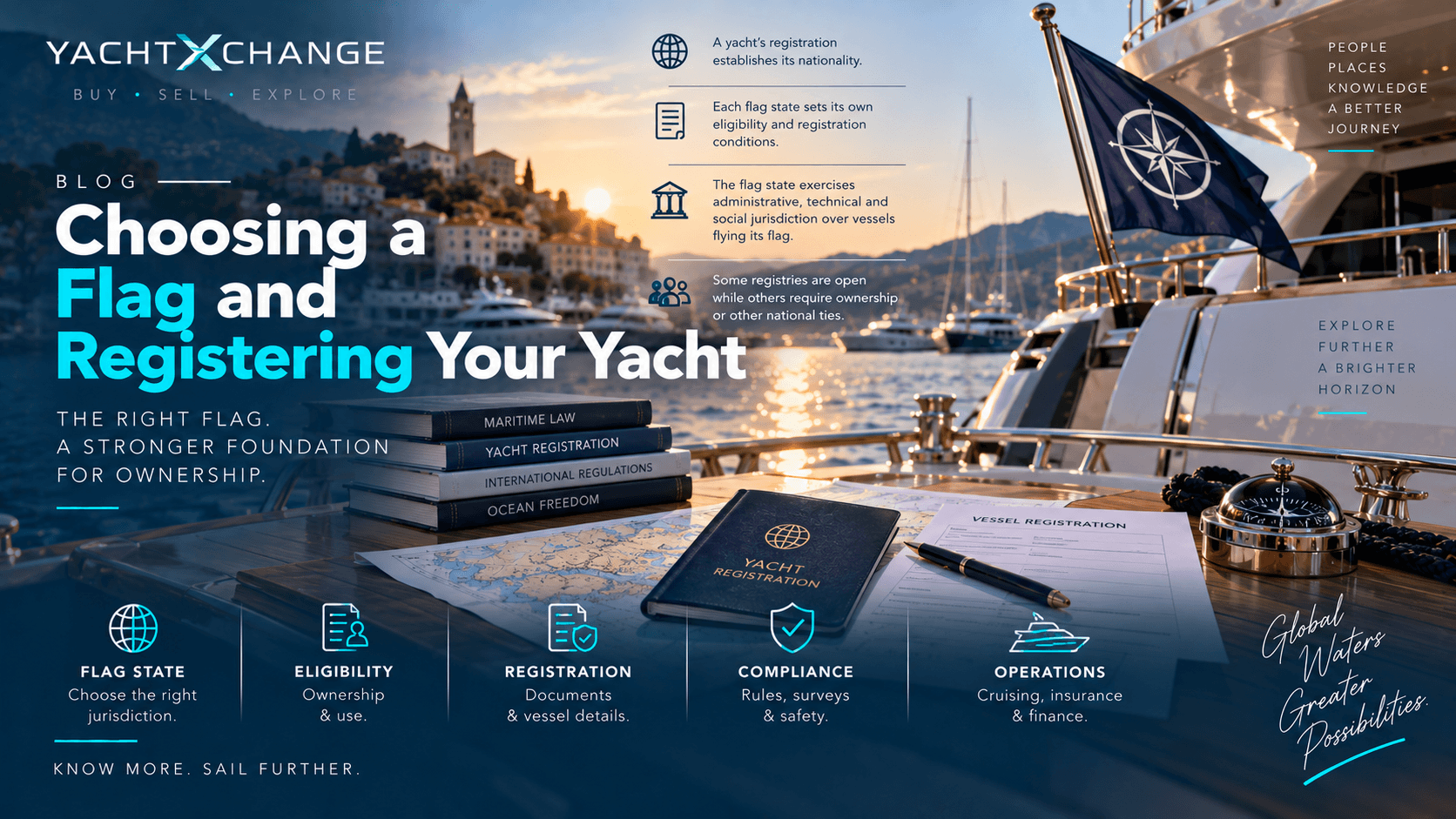
Every yacht that leaves her home waters needs a nationality, and she gets it from her flag. The flag decides which country's laws apply on board, which surveys and certificates she needs, whether she can carry paying guests, how a bank can secure a loan against her, and what questions a future buyer will ask. Yet many owners choose a flag late in a purchase, often by keeping whatever the seller had.
This guide explains what registration actually does, the main types of registry, the factors that should drive your choice, and how the process works in practice.
What registration does
Registration is more than a number painted on the transom. Depending on the registry, it can do three separate things.
- Proof of nationality. The registration certificate shows which state the yacht belongs to. You need it to cross borders, clear customs, and deal with port authorities and marinas.
- Evidence of title. Full registers record who owns the yacht. That record is valuable when you sell, because the buyer can check that the seller really owns her and that she is free of registered debts.
- Mortgage registration. Lenders usually require a registered mortgage before they finance a yacht. Only registers that record title can normally carry one.
Not every register offers all three. Some simple registers for small boats record nationality only. The UK's Small Ships Register, for example, does not prove ownership and cannot carry a registered mortgage. That can suit a small cruising boat without finance, but not a yacht you plan to borrow against.
National flags and open registries
Broadly, registries fall into two groups.
National flags are normally open to citizens or residents of that country, or to companies established there. Owners often choose them because they live in that country and want a straightforward relationship with their own authorities.
Open registries, sometimes called offshore registries, accept owners of many nationalities, usually through a company. They are popular for larger yachts because they combine international acceptance with administration designed for yachts, and in many cases specialist yacht codes for commercial use.
Some registries that are commonly used for yachts:
- The Red Ensign Group. The UK, the Crown Dependencies (such as the Isle of Man) and several UK Overseas Territories (such as the Cayman Islands, Gibraltar and the British Virgin Islands) operate their own registers under a shared framework. Yachts on these registers fly a version of the British red ensign. Not every member can register every size of vessel, and eligibility rules differ between them.
- Malta. A widely used European flag for yachts of all sizes, both private and commercial.
- The Marshall Islands. A large international register with a significant yacht fleet, particularly among larger yachts.
- Others. Many owners use their own national flag, and other registries are also used.
This list is not a recommendation. Each registry has its own eligibility rules, costs and inspection regime, and these change over time.
Private or commercial registration
This is one of the most important decisions, and it is closely linked to the flag.
A yacht registered for private use may only be used by the owner, family and guests who do not pay. Requirements are lighter, especially on smaller yachts.
A yacht registered for commercial use, usually so she can be chartered, must comply with a yacht code issued or recognised by the flag state. Several registries publish their own codes for commercial yachts, and the Red Ensign Group has a shared code for larger yachts. These codes set standards for construction, stability, fire safety, life-saving equipment, manning and crew certification. Larger commercial yachts are often also built and maintained to a classification society's rules.
Moving a private yacht into commercial use later can mean surveys, equipment upgrades and sometimes structural changes. If charter is even a possibility, say so before you buy.
Factors in choosing a flag
There is no best flag, only the best fit. Work through these points with your advisers.
- Owner residency and nationality. Some flags are only open to their own citizens, residents or companies. Your residence can also determine which flag is most practical with your own tax authorities.
- VAT and tax. The flag does not by itself decide VAT, but it interacts with it. Where the yacht is used, where the owner lives and whether she is in commercial use all matter. Some countries also have taxes linked to registering or using a yacht there.
- Charter plans. If you want to charter, check that the flag offers a commercial code suited to your yacht, and that charter under that flag is accepted in the waters where you plan to operate.
- Crew rules. Flags differ on which certificates the captain and crew must hold, which foreign certificates they recognise, and how many crew are required. This affects who you can hire.
- Survey and certification burden. Some flags inspect more often or require more documentation. A well-administered flag can support resale value.
- Financing. A lender will have a view on acceptable flags and will want a registered mortgage.
- Resale. A widely recognised, well-regarded flag makes the yacht easier to sell internationally.
The registration process
The exact steps depend on the registry, but a typical change of flag after a purchase looks like this.
- Decide the ownership structure. Many yachts, especially larger ones, are owned through a company, often set up specifically for that yacht. The company must be eligible to own a yacht under the chosen flag. Some registries require a local representative or agent.
- Collect the documents. Typically a bill of sale (or builder's certificate for a new yacht), evidence of the company's existence and directors, identification of the owners, and the yacht's technical details. Some registries require a tonnage measurement or a survey before registration.
- Deletion from the old registry. A yacht can only be on one full register at a time. The seller arranges deletion, and the new registry will usually require a deletion certificate showing that she is free of registered mortgages. This is normally coordinated with the closing of the sale.
- Provisional registration. Many registries offer provisional registration so the yacht can move while permanent documents are completed.
- Permanent registration and markings. Once all documents are accepted, the registry issues the certificate, and the yacht is marked with her name and port of registry as required.
- Certificates and compliance. For commercial yachts, surveys and certificates under the relevant code follow. Your captain or yacht manager should keep a calendar of renewals.
In practice, a maritime lawyer or registration agent handles most of this.
Common mistakes
- Keeping the seller's flag by default. It may suit the seller's residence and tax position, not yours.
- Choosing a flag for one reason only. A flag picked purely for tax can make crewing, charter or resale harder.
- Not checking eligibility before closing. Discovering after payment that your company cannot own a yacht under the chosen flag causes delays and cost.
- Ignoring charter until later. Converting to commercial use after purchase can be expensive.
- Losing track of renewals. Registration and commercial certificates expire, and an expired document can stop a yacht in port.
Start your search
If you are buying a larger yacht, our guide to buying a superyacht in Barcelona explains how flag, tax and closing fit into the purchase. The brokerages on Yachtxchange work with registration agents and maritime lawyers every week and can introduce you to the right advisers for your situation.
This article is general information, not legal or tax advice. Registry rules, fees and eligibility change and depend on your circumstances; take advice from a qualified maritime lawyer and tax adviser before you choose a flag.